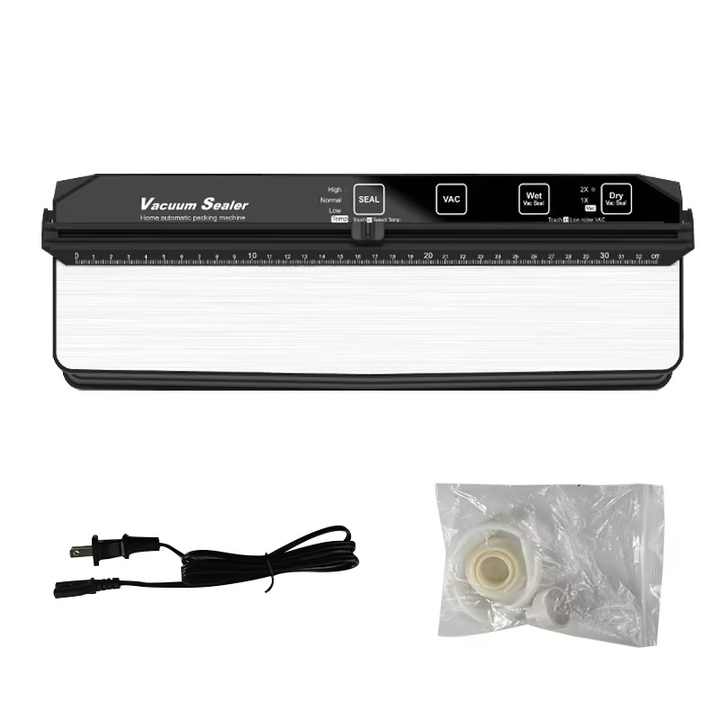
Vacuum sealer specs is where a wholesale order is won or lost: two numbers most buyers ignore until a return comes back are suction in kPa and seal width in millimetres. Get them wrong for the market and you ship units that crush soft food or pop their seals in transit. This vacuum sealer buyer’s guide reads the spec lines that decide the order before you sign a PI. The UAH76A we reference pulls 55-70 kPa dry across a 31 cm, 7 mm heat strip — mid-range vacuum sealer specs that fit most retail and distributor programs.
// 01 — Key takeaways
Dry-suction band of the UAH76A — mid-range pressure that handles fresh meat, fish and produce, the volume categories in most retail programs.
Seal-bar width across a 7 mm heating strip — wide enough for bulk roll bags, not just pre-cut pouches.
Shelf-life gain over loose storage when sealed food is then frozen, per USDA and food-storage data.
Typical MOQ per model, with smaller trial orders on request and full OEM/ODM customisation.
Warranty on every unit. We manufacture and trade our own household range — not a sourcing agent.
// 02 — Spec literacy
How do you read vacuum sealer specs?
Vacuum sealer specs come down to four lines: suction (kPa), seal-bar width (cm and mm), wet/dry capability, and rated power (W). Read those four against the food your customers seal, and the rest is packaging.
Reading vacuum sealer specs is the first job of any buyer, so take the lines one at a time. Suction is the headline. It is measured in kilopascals (kPa) and tells you how completely the pump evacuates the bag. Seal width tells you how forgiving the closure is: a wider, thicker weld survives freezer handling and long-haul shipping. Wet/dry capability tells you whether the machine copes with marinated meat and moist produce or only dry goods. Power in watts governs how many back-to-back cycles the unit sustains before the pump needs to rest.
The four spec lines that matter most
A vacuum sealer is a benchtop appliance that pulls air from a bag through its open end, then fuses the bag shut with a heated strip. Of all its vacuum sealer specs, suction and seal width are the two that drive buyer satisfaction; voltage and power decide how widely and how hard you can run it.
Why suction is quoted in kPa, not percentages
kPa is a direct pressure reading, so it compares cleanly between models. Of all the vacuum sealer specs on a sheet, this is the one buyers misread most often. Marketing copy that quotes “94% air removed” is just a kPa figure restated; a 95 kPa machine removes roughly 94% of the air in a bag. Buy on the kPa number and ignore the percentage dressing.
Why seal width matters more than buyers expect
The seal is the failure point, not the pump. A bag that loses its weld in a chest freezer or a sea container undoes the whole vacuum. A wider heat strip lays down a broader, more durable weld, which is why commercial machines run 8-12 mm strips while entry units make do with 2-3 mm. Among vacuum sealer specs, seal width is the cheapest insurance against field returns.
// 03 — Suction tiers
How much suction does a vacuum sealer need?
For most retail programs, 70-80 kPa is the sweet spot. Dry goods are fine at 40-60 kPa; bulk, long-term stockpiling wants 85 kPa and up. More suction is not automatically better — excess pressure crushes soft food.
The UAH76A sits in the practical middle: 55-70 kPa on its dry setting, with a wet setting (-1 to 65 kPa) and three sealing-temperature steps for delicate or thick-walled bags. That range covers the categories that actually sell — meat, fish, produce, dry staples — without the price and bulk of a chamber machine. Independent buyer guides put most home and light-commercial sealers in the 60-80 kPa band, so this unit lands where the demand is.
Match the tier to the customer. A camping-and-outdoor retailer can live with a dry-biased unit; a butcher-supply or meal-prep brand needs reliable wet sealing. Over-spec’ing wastes margin; under-spec’ing generates returns.
The number that drives returns is not the highest kPa on the box — it is the seal width and the wet-mode behaviour. A buyer who matches those two lines to the customer’s food rarely sees the unit come back.
— Mi Lan, Founder, Guilin Prime Household Products Co., LTD
// 04 — Wet vs dry
External vs chamber, wet vs dry — which does your buyer need?
External sealers like the UAH76A pull air through the bag’s open end, stay compact, and retail under $200 — right for household and light-commercial buyers. Chamber sealers cost far more and suit restaurant and processing buyers.
For a household and kitchen catalogue, the external format wins on price, size and shelf appeal. Where buyers ask about liquids — marinades, brines, sous-vide prep — point them at the wet setting and the external vacuum hose, which lets the operator seal jars and canisters without forcing liquid into the pump.
The external vacuum hose accessory
The supplied hose converts the sealer into a canister and container evacuator. It is the feature that lets one SKU serve both bag-sealing and jar-sealing customers, which widens the addressable market for a private-label program without adding a second product.
// 05 — Specifications
UAH76A vacuum sealer specs in full
The UAH76A vacuum sealer specs: 135 W, 100-240 V, a 31 cm seal bar, a 7 mm heat strip, 55-70 kPa dry suction and a double vacuum pump, in an ABS body with a detachable water tray and sliding cutter.
Below is the spec sheet a buyer should weigh before committing volume. Every figure here is a line your own customers may quote back to you, so it pays to read them against the use case rather than the headline.
UAH76A spec sheet
Rev. 2026.06
| Spec | This model | Why it matters |
| Rated power | 135 W | Sustains back-to-back cycles for steady packing runs |
| Voltage | 100-240 V | Single SKU ships to most markets — only the plug changes |
| Seal width | 31 cm (7 mm strip) | Wide, durable weld for roll bags and bulk pouches |
| Suction (dry) | 55-70 kPa | Mid-tier pressure for meat, fish, produce and dry goods |
| Suction (wet) | -1 to 65 kPa | Handles marinated and moist food without fouling the seal |
| Pump | Double vacuum pump | Faster, deeper evacuation than a single-pump unit |
| Flow rate | 4-8 L/min (±15%) | Cycle speed buyers can quote to their own customers |
| Material | ABS | Light, durable housing suited to retail price points |
| Controls | Touch panel, 3 temp steps | Adjustable heat for thin pouches and thick roll bags |
// 06 — Model comparison
How do the vacuum sealer specs compare across our range?
Across our external range, the UAH76A is the wide-bar, dual-pump option built for volume. Lighter models trade seal width and pump count for a lower price; a cordless model adds portability. Match the specs to the customer.
| Model (ERP code) | Power | Key spec | From $/unit |
|---|---|---|---|
| UAH76A Wide bar, dual pump | 135 W | 31 cm / 7 mm, 55-70 kPa, double pump | $16.30 |
| UAH33G | 120 W | 30 cm, 65 kPa, bag cutter | $11.00 |
| UAH25G | — | 30 cm, 65 kPa, stainless touch screen | $11.90 |
| UAH60G | 120 W | 30 cm, 65 kPa, touchscreen | $10.50 |
| UAH78CX | 110 W | 30 cm, 2000 mAh cordless | $16.00 |
Prices shown are factory-direct floor figures at top volume tiers; request a quote for your exact quantity. The UAH76A’s premium over the entry models buys the wider seal bar and the double pump — the two specs that reduce field failures.
// 07 — Food safety
Is vacuum-sealed food actually safe?
Vacuum sealing extends shelf life, but it is a packaging method, not a preservation method. USDA FSIS is explicit: refrigerated food still needs the fridge and frozen food still needs the freezer after sealing. It is not shelf-stable.
This is the line your customers will ask about, so brief your sales team on it. The low-oxygen environment a sealer creates can favour Clostridium botulinum, an anaerobic pathogen, which is exactly why USDA FSIS and Michigan State University Extension stress that vacuum-sealed food must still be kept cold — fridge at 40°F (4°C) or below, freezer at 0°F (-18°C) or below. The FDA refrigerator and freezer storage chart confirms that freezing at 0°F keeps food safe indefinitely; quality, not safety, is what shelf-life numbers track.
How much longer does sealed food last?
Used with freezing, vacuum sealing extends quality life 3-5× over loose storage. Beef, pork and poultry that keep about six months loose can hold two to three years vacuum-sealed and frozen; blanched vegetables stretch from roughly eight months to two to three years. Those gains are real selling points — as long as the unit pairs sealing with cold storage, not in place of it.
What to brief your sales team
Train staff on one line: vacuum sealing slows spoilage and freezer burn, but it does not make food shelf-stable. Refrigerated and frozen foods still need the fridge or freezer after sealing. Said clearly up front, that honesty builds buyer trust and heads off the most common after-sales complaint.
// 08 — How we manufacture
How we manufacture and quality-check these sealers
Prime Household is a manufacturer and trading company of household and kitchen products, so these sealers are built and tested in our own facility. Production runs through four controlled stages, each with its own checkpoint before packing.
In-house tooling & molding
The ABS housing and seal-bar assembly are tooled and molded on our own lines, so private-mould and ODM changes to logo, colour and casing are handled in-house rather than outsourced.
Pump & PCBA burn-in
The double vacuum pump and touch-panel PCBA are burned in and function-tested before assembly, catching weak pumps and control faults early instead of in the field.
Seal-integrity & vacuum test
Every batch is sampled for weld strength and held-vacuum, the two specs that drive returns. The in-line seal-leak reject rate stays under 1% before packing.
Compliance & warranty
Units are built to the export marks relevant to your market — CE and RoHS among them — and every unit ships with a 12-month warranty. See our Trust Center for the full certification list and factory figures.
// 09 — B2B sourcing
B2B terms: MOQ, lead time and shipping
MOQ is typically 100 units per model, with smaller trial orders on request. Bulk production runs about 15-30 days after deposit; samples in 3-7 days. We ship worldwide FOB China on FOB, EXW or CIF terms.
Best for which buyers?
The UAH76A suits distributors, kitchenware retailers, meal-prep and butcher-supply brands, and private-label programs that need a wide-bar, wet/dry-capable external sealer at a mid-range price. The single 100-240 V SKU keeps your range simple — one model, one carton, a plug change per market.
Packaging and freight at a glance
Each unit packs to 38.5 × 9 × 18.5 cm at about 1 kg gross; the export carton holds 10 units at 47 × 39.5 × 39 cm and 14.5 kg, which lets you model container loads and landed cost before you order.
// 10 — FAQ
Vacuum sealer sourcing FAQ
How much suction does a household vacuum sealer need?
What seal width should I look for?
Does vacuum sealing replace refrigeration?
How long does vacuum-sealed food last?
Do you offer OEM and wholesale pricing?
What are the MOQ, lead time and warranty?
// 11 — Conclusion
The bottom line for buyers
Vacuum sealer specs come down to four lines and one safety fact. Read suction in kPa, weigh seal width and wet-mode behaviour against your customer’s food, confirm the voltage covers your markets, and brief your team that sealing extends shelf life only alongside cold storage. Judge any unit on those vacuum sealer specs and you will buy the right machine for the order. The UAH76A covers the mainstream retail and distributor categories with a wide 31 cm bar, a double pump and a 55-70 kPa dry range — the mid-tier configuration that keeps returns low.
// Featured model — UAH76A
Vacuum Sealer, 135W, 31cm Seal, External Hose
Automatic touchscreen external sealer — 135 W, 31 cm / 7 mm seal, 55-70 kPa dry, double pump, wet/dry modes, external hose.
From $16.30/unit (volume tiers)
Similar products
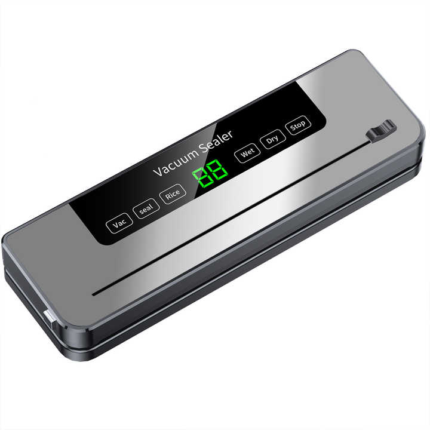
Vacuum Sealer, 120W, 65kPa, 30cm Seal, Bag Cutter
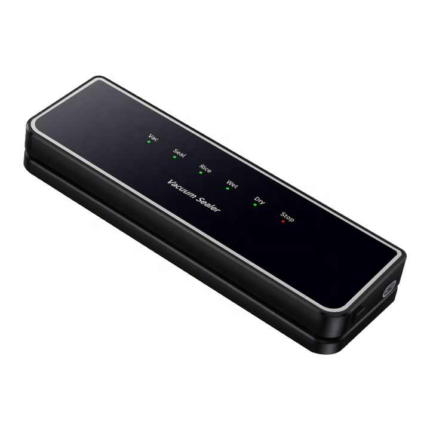
Vacuum Sealer, 120W, 65kPa, Rose Gold, External Hose
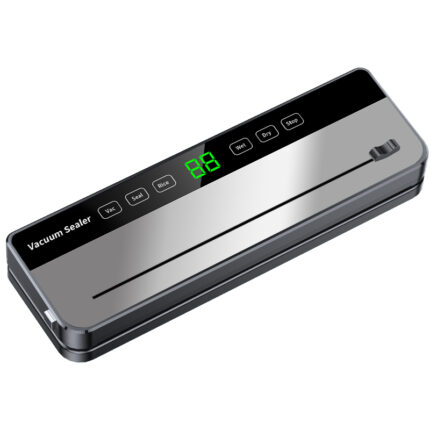
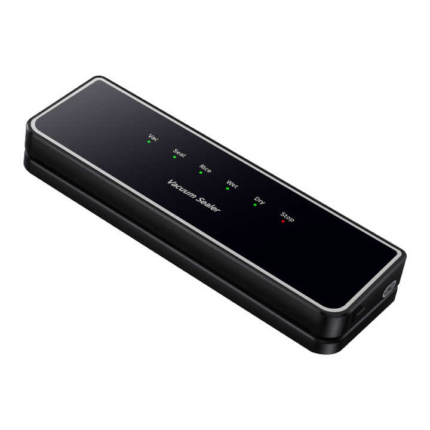
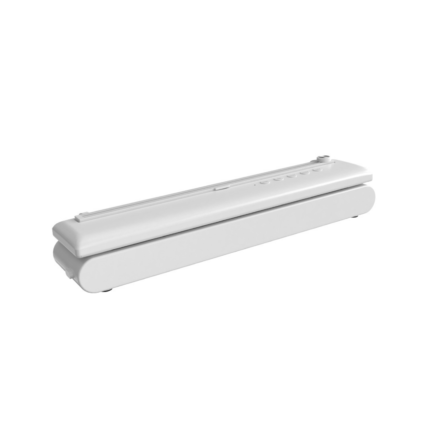
Vacuum Sealer, 110W, 30cm Seal, 2000mAh Cordless
Ready to order or need a wholesale quote?
Prime Household manufactures and trades these appliances direct from our Guilin, China factory — OEM, private-label and B2B welcome. Tell us your market and volume.