LDS Robot Vacuum 2.7kPa: What UAHRC02 Means to Buyers
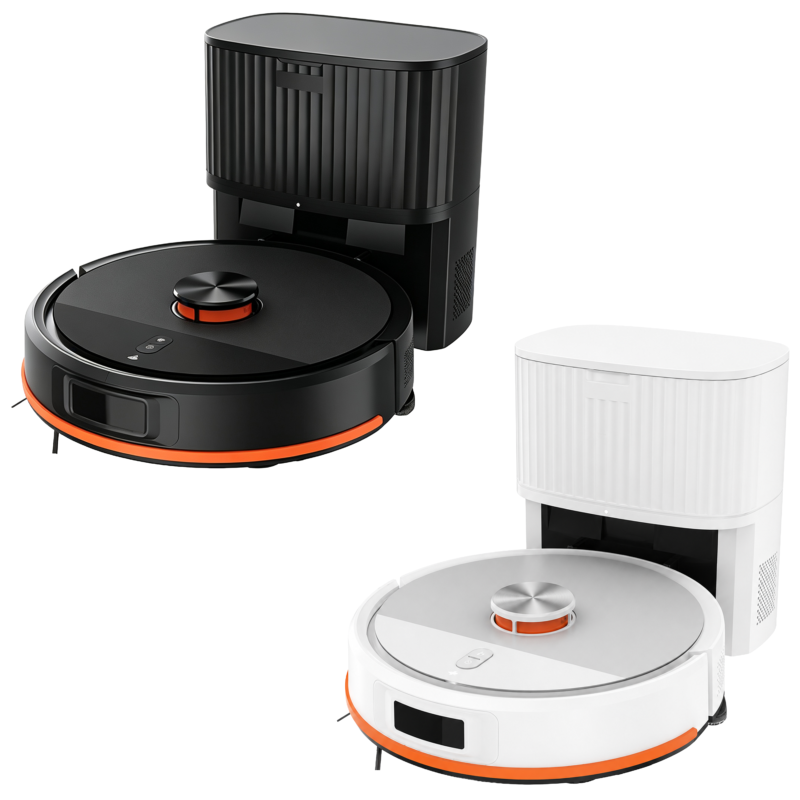
At 50 units UAHRC02 is listed at $115 each, so navigation and support scope matter before volume does. An LDS robot vacuum is a floor-cleaning robot that uses laser radar mapping. This buyer guide tests whether UAHRC02’s 2.7kPa mode, connected controls, exact price tiers and packing data fit a wholesale line.
// 01 — Key takeaways
Prime Household’s documented operation includes a 15,000 m² factory, seven production lines and 205 skilled workers. The Trust Center sets out the company facts and 12-month warranty.
Three listed suction settings: 0.9, 1.2 and 2.7Kpa.
The longest value in the ≈120/100/80-minute catalogue sequence.
Published per-unit price at 10,000 units; the 50-unit tier is $115.
Standard MOQ / custom MOQ in the product record.
// 02 — Product fit
What makes this LDS robot vacuum a different wholesale buy?
UAHRC02 adds two scope decisions beyond the robot specification: a Wi-Fi control service and a separate dust collector. Remote functions need a clear account and support owner, while the collector brings its own electrical and noise fields. Both affect the delivered SKU after the robot hardware is fixed.
Which connected functions enter the support brief?
The listed app actions are remote on/off, scheduling, zone and spot cleaning, mode selection, resume cleaning, carpet boost, strong cleaning, auto recharge, map editing and virtual walls. Supported mobile platforms, account reset, firmware responsibility, data-policy link and support period remain quotation fields because the catalogue does not supply them.
What ships beyond the robot itself?
The pack lists one brush, cleaning cloth, user manual, dust collector, cleaning brush and adapter with the main unit. The collector is listed at 700W and no more than 85dB. Its label and manual therefore stay distinct from the robot’s electrical data.
// 03 — Specifications
Which UAHRC02 specifications deserve order status?
Navigation, battery, charging input, suction levels, runtime sequence, capacities, noise, dimensions and colour define the catalogue configuration. The table preserves every supplied value and unit. It does not assign names to the three runtime values or turn pressure into a pickup-performance claim.
UAHRC02 spec sheet
Rev. 2026.08
| Spec | This model | Why it matters |
|---|---|---|
| Navigation | Laser Radar Mapping | Defines the map-led control platform |
| Cleaning module | Sweep, suction and mop 3-in-1 | Defines the listed cleaning hardware |
| Battery | 14.4V/2600mAh | Feeds the electrical release file |
| Working time | ≈ 120/100/80min | Preserves all three listed values |
| Charging input | DC 19V-1.2A | Defines adapter output |
| Charging time | 4–6 hours | Sets the listed recharge window |
| Maximum power | 50W | Feeds the electrical file |
| Suction power | 0.9/1.2/2.7Kpa | Retains the three-stage pressure record |
| Dustbin | 300ml | Defines dry-debris capacity |
| Water tank | 240ml | Defines the electronic mopping tank |
| Robot noise | ≤70dB | Records the catalogue noise ceiling |
| Robot size | 306×298×83mm | Defines footprint and body height |
| Net weight | 2.45kg | Separates unit weight from packed weight |
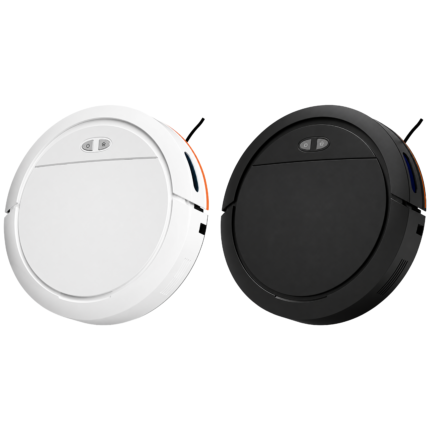
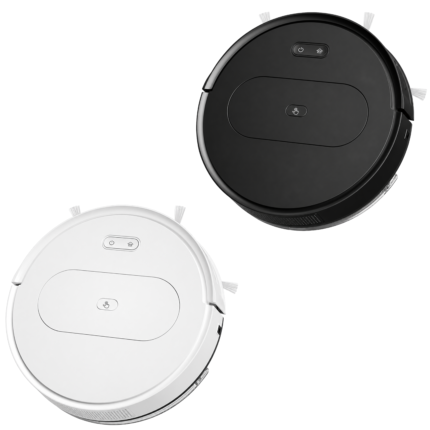
| Colours | White, Black | Defines the listed colour choices |
How do the three runtime values read?
The source gives approximately 120, 100 and 80 minutes without pairing them to named suction modes. Keep the sequence intact in product copy. The Acceptance section provides the single procedure for linking a selected control setting to elapsed time and return behavior.
Does 2.7kPa predict cleaning performance?
No. Pressure is one operating specification, not a complete measure of pickup, edge coverage or navigation. IEC/ASTM 62885-7:2020 publishes official methods for measuring dry-cleaning robot performance under household or similar conditions. It is a method reference here, not a claim of certification.
// 04 — Comparison
How does LDS compare with gyro and random navigation?
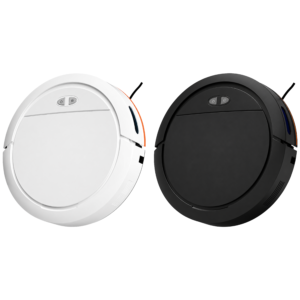
UAHRC02 is the map-led model in this directly fetched comparison. UAHRC06 uses gyroscope plus pedometer navigation, while UAHRC14 uses random navigation. Power, suction, runtime, capacity and published tier basis also differ, so the table compares platforms rather than ranking one sensor in isolation.
| Model | Navigation | Power and suction | Runtime | Dustbin / water | Published price and tier |
|---|---|---|---|---|---|
| UAHRC02 | Laser Radar Mapping | 50W; 0.9/1.2/2.7Kpa | ≈ 120/100/80min | 300ml / 240ml | $115 at 50 units |
| UAHRC06 | Gyroscope + Pedometer | 15.5W; 1.5/2.0Kpa | ≈ 90/70min | 335ml / 100ml | $58.90 at 1 unit |
| UAHRC14 | Random navigation | 17W; 600Pa | 90min | Approx. 200ml / — | $42.80 at 500 units |
When does the LDS platform earn its place?
Choose UAHRC02 when room-level controls and a separate dust collector support the retail proposition. Distributors can merchandise named zones and virtual boundaries. Private-label programs must also own the connected-service brief, including store naming, language, resets, updates and support contact.
When is a simpler platform enough?
UAHRC06 fits a gyro-led brief with Bluetooth app control and lower published pricing; its fetched record says the auto-recharge module is absent. UAHRC14 fits a random-navigation proposition. Either can reduce service scope when editable room controls do not create channel value.
Why does each price keep its quantity?
The matrix shows catalogue entries at different quantities: 50 units for UAHRC02, one for UAHRC06 and 500 for UAHRC14. It narrows the function set but cannot compare landed cost. A final quote needs the same quantity, customization and shipping scope for every shortlisted model.
// 05 — Acceptance
What must a UAHRC02 pre-order test prove?
The acceptance protocol covers map creation, room controls, obstacle and edge response, a named battery mode, charging return, water delivery, offline behavior and account reset on one documented floor. It is the only test checklist in this article, keeping observed evidence separate from catalogue specifications.
Evidence status: no completed floor result or traceable sample log was supplied with this job. The catalogue’s packaging volume is shipping data, not first-hand cleaning evidence. The fields below define what a future result needs without implying that one already exists.
Fix the floor setup and mapping sequence
Mark the test area, floor materials, furniture positions, door states, dock location and named zones. Create a first map, then exercise zone cleaning, a virtual wall, resume cleaning and a relocated dock. Log missed area, duplicated path, relocation event and saved-map state after a power cycle.
Measure obstacle and anti-fall response
Use a supervised layout with low furniture legs, loose cable, dark surface and reachable step edge. Keep each object’s position fixed for a repeat pass. Count contacts and stops, note the closest edge approach, and classify any intervention; installed sensor counts alone do not prove behavior.
Time one named battery mode
Begin at full charge, select one suction mode and use the same mapped area until return or stop. Capture elapsed runtime, remaining charge, covered zones and resume outcome. Then time recharge with the supplied DC 19V-1.2A adapter from a stated starting level against the four-to-six-hour catalogue window.
Assess the 240ml electronic water tank
Fill to a measured level, fit the intended cloth and use each declared hard-floor surface. Inspect water delivery, edge wetting, wheel marks, cloth retention and tank removal. Define excluded floor materials in the manual; the flat mop has no documented stain-removal result in the source.
Complete the app and security handover
Capture app name, supported platforms, Wi-Fi requirement, account owner, permissions, firmware path, reset steps, map deletion, data-policy link and support contact. Test physical controls and a scheduled task offline. NIST IR 8259 Rev. 1 frames these as IoT customer-information and cybersecurity questions, not a UAHRC02 certification.
// 06 — Commercials
How do MOQ and price tiers affect a UAHRC02 order?
The published ladder runs from $115 per unit at 50 units to $88 at 10,000. The same product record lists a 200-unit standard MOQ and 1,000-unit custom MOQ. Quantity, configuration and applicable MOQ therefore belong together; a price cannot be detached from its tier.
Published UAHRC02 price ladder
USD / unit
| Published quantity | Price per unit | Use in the buying file |
|---|---|---|
| 50 units | $115.00 | First published tier |
| 1,000 units | $102.00 | Also matches the custom MOQ quantity |
| 3,000 units | $93.00 | Volume tier |
| 10,000 units | $88.00 | Lowest published tier |
Which MOQ belongs on the quotation?
The catalogue begins its price ladder below the standard MOQ but supplies no 200-unit price. A 1,000-unit custom brief can use $102 only when the quoted configuration matches that reference. This preserves both commercial records without inventing the missing tier.
Which terms still need a quote?
Colour beyond black or white, branding, manual language, label, retail box, carton marks and accessory presentation need explicit scope. Production lead time, Incoterm, shipment point, payment schedule, inspection basis, spare-parts plan and warranty route are also order-specific; no values are supplied for them here.
// 07 — Logistics
What do UAHRC02 packing figures say about freight?
UAHRC02 moves from a 2.45kg robot to a 6.1kg retail pack and a one-unit 6.5kg export carton. The catalogue carton volume is 0.04521018 m³. Keeping unit, retail, carton and container entries separate prevents a product dimension or catalogue loading count from becoming a freight assumption.
UAHRC02 logistics record
Catalogue basis
| Layer | Dimensions / weight | Quantity or contents |
|---|---|---|
| Unit | 306×298×83mm; 2.45kg net | Robot |
| Retail pack | 347×347×330mm; 6.1kg gross | Main unit, brush, cloth, manual, dust collector, cleaning brush, adapter |
| Export carton | 362×362×345mm; 6.5kg gross; 0.04521018 m³ | 1 unit |
| 20ft container | Catalogue loading figure | 618 units |
| 40ft container | Catalogue loading figure | 1,280 units |
| 40HQ container | Catalogue loading figure | 1,501 units |
Freight caveat: container counts are catalogue planning figures, not carrier bookings. Final capacity depends on the released carton, pallet pattern, loading method, route and carrier limits.
// 08 — Factory control
How do we manufacture and qualify a UAHRC02 order?
Guilin Prime Household Products Co., Ltd. is a manufacturer and trading company for household and kitchen products, not a sourcing agent. Own-manufactured work and traded-range qualification follow different production routes, but both use a released specification, quality control, packing inspection and a 12-month warranty path.
In-house tooling and private-mould control
Own-manufactured variants define housing, tool, colour and logo geometry in the release file. Traded items use the corresponding supplier specification and incoming criteria, so the order identifies which route applies.
Motor and PCBA qualification
UAHRC02 names a brushless DC motor, laser radar mapping, 50W maximum power and Wi-Fi controls. Motor, PCBA, sensor and connected functions are assigned to the relevant production or incoming stage; no unstated burn-in duration is claimed.
Quality control and pack inspection
Quality control covers the released pressure settings, charge behavior, electronic water tank and sensor modules. Finished-pack inspection aligns model, colour, adapter, manual, accessories and carton marks with the order file.
CE, RoHS and 12-month warranty
CE and RoHS are named export programs in the documented factory profile, and products carry at least a 12-month warranty. Model and destination applicability belong in the order file; this article does not attach or invent certificates.
Buy one released configuration, with every physical and connected component tied to the same order file.
— Mi Lan, Founder, Guilin Prime Household Products Co., Ltd.
// 09 — Purchase order
What must the UAHRC02 purchase order lock down?
The purchase order needs one compact release schedule for identity, declared performance, connected-service ownership, pack configuration, commercial terms and acceptance. Referencing the specification, price and protocol sections keeps each fact in one place while still binding the complete wholesale deliverable.
UAHRC02 release schedule
One table
| Field | Purchase-order entry |
|---|---|
| Identity | UAHRC02; black or white; branding and destination label language |
| Declared performance | Reference the signed revision of the specification table above |
| Connected service | App name, platforms, account owner, update/reset responsibility, data-policy link and support period |
| Pack | Accessory count, adapter version, manual, retail box and carton marks |
| Commercial scope | Quantity, applicable tier and MOQ, customization, lead time, Incoterm, shipment point and payment schedule |
| Acceptance and warranty | Reference the signed protocol above, inspection basis and 12-month claim route |
// 10 — FAQ
Frequently asked questions about the LDS robot vacuum
These answers separate catalogue facts from order evidence: how LiDAR works, what Wi-Fi dependence remains unstated, how navigation types differ, what the runtime sequence means, what sensor counts prove and which MOQ belongs beside each published price.
How does LiDAR work in a robot vacuum?
LiDAR sends laser pulses and uses returned distance information to map nearby walls and objects. UAHRC02 calls this Laser Radar Mapping and links it to zone cleaning, map editing and virtual walls. The catalogue names those controls but gives no measured map-accuracy or coverage result.
Does the UAHRC02 work without Wi-Fi?
The product record identifies mobile-app control through a Wi-Fi connection, but it does not state which functions remain available offline. Offline behavior therefore remains an acceptance question, not a catalogue claim. The protocol above keeps that finding with the other observed unit results.
Is LiDAR better than gyroscope navigation?
LiDAR is the stronger fit when editable maps, zones and virtual walls are required. Gyroscope navigation can suit a line with a simpler control brief and lower published pricing. The directly fetched UAHRC06 uses gyroscope plus pedometer navigation; UAHRC02 uses laser radar mapping.
How long does the UAHRC02 run and charge?
The listed working times are approximately 120, 100 and 80 minutes, while charging takes four to six hours. The source does not map each runtime to a named suction mode. Only the Acceptance section defines how to pair a selected mode with elapsed time and return behavior.
Can the UAHRC02 avoid stairs and obstacles?
UAHRC02 lists two obstacle-avoidance modules and three anti-fall modules. Those counts identify installed sensor groups, not an absolute guarantee for every edge, cable or dark surface. The controlled setup in the Acceptance section supplies the contact, stop and edge-response evidence for an order.
What are the UAHRC02 MOQ and price tiers?
The standard MOQ is 200 units and the custom MOQ is 1,000. Published per-unit tiers are $115 at 50 units, $102 at 1,000, $93 at 3,000 and $88 at 10,000. The applicable quantity, configuration and MOQ must appear together on the quotation.
// 11 — Decision
Conclusion: when does UAHRC02 fit the line?
UAHRC02 fits a wholesale line that can support room-level navigation, three-stage suction and sweep-suction-mop hardware as a higher-scope proposition. A simpler platform fits when those capabilities do not justify their retail value, service load or price difference for the target channel.
Use the comparison and commercial tables to select the platform, then keep any observed unit evidence in the single Acceptance section. That creates a shorter decision file without turning an unstated result into a sales claim.
Featured model
UAHRC02 LDS robot vacuum and mop
Laser radar mapping · 0.9/1.2/2.7Kpa · ≈120/100/80min · 240ml water tank
Similar products
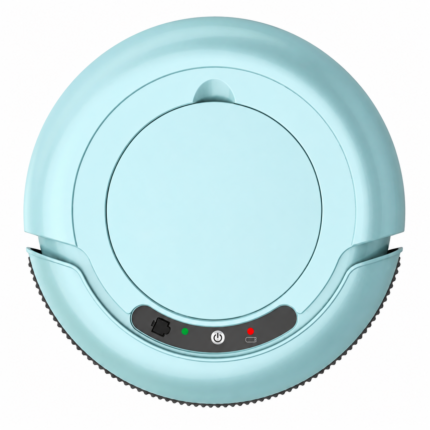
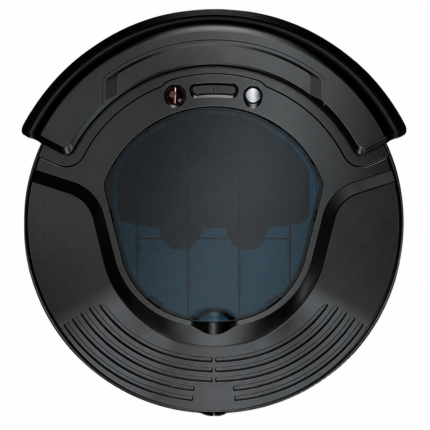
Compare adjacent navigation platforms before fixing the final product and support brief.
Ready to order or need a wholesale quote?
Prime Household is a manufacturer and trading company of household and kitchen products. OEM, ODM, private-label and B2B orders are welcome. Tell us your market, configuration and volume.