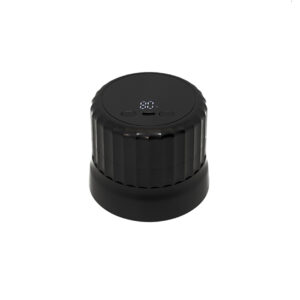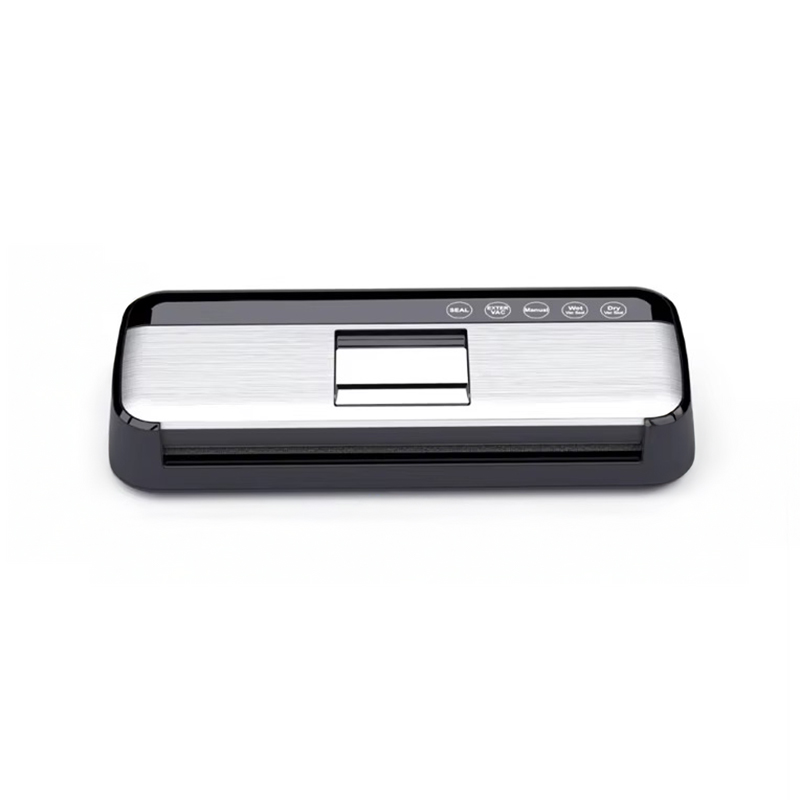
Two machines can carry the same 30 cm seal bar and still differ by 30 kPa where it counts — and that gap turns into leaking brisket bags in your customer’s freezer eighteen months after the container lands. The UAH97AX 135W vacuum sealer is an external, dual-pump tabletop unit rated 60–95 kPa on dry mode and up to 65 kPa on wet, with a 30 cm bar and a 5 mm/7 mm heating strip. This page sets out what those numbers buy, and where a cheaper 65 kPa sibling is the smarter line item.
// 01 — Key takeaways
Our own capacity across 7 assembly lines in a 15,000 m² facility with 205 workers, shipping to 56+ countries. Every unit carries a minimum 12-month warranty. Details on our Trust Center.
Top of the UAH97AX dry-mode range (60–95 kPa). Wet mode is a separate curve that tops out at 65 kPa, because pulling harder on a moist bag pulls liquid into the pump.
Seal bar width. It fixes the widest bag you can run — not the volume of food per bag.
Constant-temperature heating strip: 5 mm on wet, 7 mm on dry. A wider weld is the difference between a seal and a slow leak.
Catalogue tier floor at 5,000 units, against $22.40 at the first 10-unit tier.
// 02 — Definition
What a 135W vacuum sealer actually is
A 135W vacuum sealer is an external suction machine: the bag sits outside the body, a pump draws air through the open end, and a heated strip welds it shut. The 135 W is the electrical draw of the pump and heater together — it describes how hard the machine can work, not how deep a vacuum it reaches.
What the wattage describes, and what it does not
Wattage and vacuum depth are separate specifications that buyers routinely conflate. Power sets the duty cycle — how many bags the unit runs back to back before the pump needs to rest. Vacuum depth, quoted in kPa, sets how much air is left in the bag when the strip fires. The UAH97AX carries a double vacuum pump at 135 W, which is why it holds a 4–8 L/min flow rate rather than fading after the first few cycles.
Why external, not chamber
External sealers use embossed or channelled bags so air has a path out. Chamber machines evacuate a sealed box, use flat bags, and cope with free liquid. They are also heavier and slower per cycle at this price band, and they land in a different retail slot entirely. For a household or light-commercial programme priced under $25 FOB, external is the category, and 30 cm is its practical bar width.
What “60 ~ 95 kPa” on the datasheet means
It is a range, not a single figure, because the pump ramps. The 95 kPa figure is the ceiling on dry mode with a well-seated bag; 60 kPa is where the range starts. Reading only the top number is how buyers end up disappointed by a unit that was honestly specified. Wet mode is quoted separately at −1 to 65 kPa.
// 03 — Suction
How much suction do you actually need?
Most household sealing sits comfortably between 60 and 80 kPa. Dry goods and portioned protein seal cleanly at 65 kPa. The case for a 95 kPa ceiling is dense, irregular cuts and long-horizon freezer storage, where residual air is what eventually shows up as freezer burn along an exposed edge.
Does 95 kPa matter for dry goods?
Rarely. Rice, coffee, pasta and dehydrated stock reach a tight bag well below the ceiling, and the extra pull mainly crushes the contents. If your programme is a pantry-and-dry-goods retail story, the 65 kPa UAHSS1 at $13.00 covers it and leaves margin in the landed cost. Specifying 95 kPa for rice is paying for headroom the end user never reaches.
What happens on moist protein?
Moisture is the constraint, not the pump. Every external sealer drops its suction on wet mode deliberately — the UAH97AX to a 65 kPa ceiling — because liquid drawn across the strip prevents a weld from forming and eventually reaches the pump. That is what the detachable water tray on this unit is for, and why the wet strip runs 5 mm while dry runs 7 mm.
Where the food-safety line actually sits
Vacuum packing slows oxidation and freezer burn. It is not a preservation method on its own. The FDA’s guidance on growth and toxin formation in reduced-oxygen packaging is explicit that removing oxygen removes competing spoilage organisms without removing the risk from anaerobes, so refrigeration and time control still carry the load. Michigan State University Extension makes the same point for consumers in its note on vacuum-sealed food safety. Keep that framing in your packaging copy — it protects the brand you are building.
Buyers ask us for the highest kPa on the sheet. The right question is which mode their end user will actually run, because the wet-mode ceiling is the number that decides whether a bag of marinated chicken holds.
— Mi Lan, Founder, Guilin Prime Household Products Co., Ltd.
// 04 — Seal bar
What does a 30 cm seal bar change?
The bar width sets the widest bag the machine can weld in one pass — nothing else. A 30 cm bar runs the two commodity roll widths, 20 cm and 28 cm, with clearance at each end. It does not increase how much food fits in a bag; bag length does that.
Which bag widths fit?
A 28 cm embossed roll is the widest common stock, and it needs the full 30 cm bar to weld corner to corner. Below that, 20 cm and 25 cm rolls run with room to spare. If your customer’s roll supply is 30 cm or wider, this unit is the wrong specification and you want a 35 cm or 40 cm bar instead — we build both.
Why weld width beats bar length on a vacuum sealer
A 30 cm bar with a 2 mm weld is a worse seal than a 26 cm bar with a 7 mm weld. This 135W vacuum sealer runs a constant-temperature strip at 7 mm dry and 5 mm wet, which is wide enough to survive a bag being handled, frozen, and stacked. Strip width is the specification that predicts returns; bar length is the one that predicts fit.
Throughput per cycle
At a 4–8 L/min flow rate, cycle time is set by bag volume rather than bar width. A half-litre portion evacuates in seconds; a 3-litre roast bag takes noticeably longer. The automatic cover closing on this unit removes the manual press step, which is what makes back-to-back cycles practical for a small deli counter rather than just a home kitchen.
// 05 — Specifications
UAH97AX spec sheet
Below is the catalogue record for the UAH97AX 135W vacuum sealer as we build it: 100–240 V, 30 cm seal, 60–95 kPa dry and −1 to 65 kPa wet, at a 4–8 L/min flow rate in an ABS body with an aluminium cover. Figures are catalogue values; the approved sample governs any order.
UAH97AX spec sheet
Rev. 2026.09
| Spec | This model | Why it matters |
| Rated power | 135 W | Sustains back-to-back cycles without the pump fading |
| Voltage | 100–240 V | One SKU covers EU, US, UK and AU; only the cord set changes |
| Sealing width | 30 cm | Runs 20 cm and 28 cm commodity rolls with clearance |
| Heating strip | 7 mm dry / 5 mm wet | Weld width is the single best predictor of seal returns |
| Suction (dry) | 60 ~ 95 kPa | Ceiling for dense cuts and long-horizon freezer storage |
| Suction (wet) | −1 ~ 65 kPa | Deliberately lower so liquid is not pulled across the strip |
| Flow rate | 4–8 L/min ± 15% | Sets cycle time on large bags, not the bar width |
| Material | ABS + aluminium cover | Metal cover reads as a step up on shelf against all-plastic rivals |
| Accessories | Vacuum bags, external hose | Hose enables canister and jar sealing out of the box |
What is not on the sheet
Three things buyers ask for that this record does not carry: a rated duty cycle in bags per hour, a pump service life in cycles, and a decibel figure. We do not publish numbers we have not tested to a stated method, so ask for them against your own sample protocol rather than reading them off a competitor’s marketing sheet.
Packing and cube
The export carton holds 10 units at 20 kg gross, measuring 54 × 43 × 43.9 cm. That is a real number worth doing the arithmetic on before you build a landed-cost model, because per-unit cube is where a cheap FOB price quietly gets expensive.
// 06 — Comparison
How it compares to our other 30 cm models
All four models below share the same 30 cm bar, so bar width is not the variable — suction ceiling, strip design and tier floor are. The UAH97AX and UAH97A are the same platform listed two ways; the UAH02T and UAHSS1 sit a full price band lower with shallower vacuum.
| Model | Power | Suction | Seal bar | Tier floor $/unit |
|---|---|---|---|---|
| UAH97AX Featured | 135 W | 60–95 kPa dry | 30 cm | $21.24 @ 5,000 |
| UAH97A | 135 W | 60–95 kPa dry | 30 cm | $21.24 @ 5,000 |
| UAH02T | 115 W | 35–70 kPa | 30 cm | $11.80 @ 10,000 |
| UAHSS1 | 120 W | 65 kPa | 30 cm | $12.00 @ 5,000 |

UAH97AX against UAH97A
Same 135 W dual-pump platform, same 30 cm bar, same 60–95 kPa dry range, same $22.40 entry price and same $21.24 floor at 5,000 units. Both carry the same ABS body and aluminium cover on the spec record, so the difference is in the listing rather than the engineering: the UAH97AX is presented with its bag cutter, the UAH97A on its cover. Pick whichever photographs better for your channel.
UAH97AX against UAH02T
The UAH02T is the interesting rival internally. It runs 115 W with a 35–70 kPa range but carries double 3 mm heating strips, so it lays two welds instead of one wide one — a genuinely different reliability strategy. Its tier floor is $11.80 at 10,000 units against $21.24, which is a large gap in a retail price ladder. Choose the UAH02T when redundancy on the weld matters more than vacuum depth.
UAH97AX against UAHSS1
The UAHSS1 is the volume option: 120 W, a flat 65 kPa, a 3 mm strip, stainless steel and ABS, with roll-bag storage and a built-in cutter at a $12.00 floor. It also has the friendlier commercial terms — its catalogue tier table opens at a single unit. Where the UAH97AX earns its premium is the 95 kPa dry ceiling and the 7 mm dry weld.
// 07 — Manufacturing
How we manufacture this sealer
Prime Household has manufactured household appliances since 2005, as a manufacturer and trading company: this platform is built on our own lines rather than bought in and rebadged. Production runs across 7 assembly lines in a 15,000 m² facility staffed by 205 workers, with a rated capacity of 100,000 units per month.
In-house tooling and molding
The ABS body and the aluminium cover run from our own moulds, which is what makes a private-label colour or a re-cut logo boss a tooling conversation rather than a supplier hunt. Cover finish, panel print and packaging are all open to your specification.
Pump and PCBA burn-in
The double vacuum pump and the touch-panel PCBA are powered and exercised before assembly, because the failure mode that matters on an external sealer is a pump that passes once and degrades. Burn-in is where a marginal pump declares itself, not on the packing bench.
Seal-integrity and vacuum test
Finished units are run on both curves — the 60–95 kPa dry cycle and the 65 kPa wet cycle — with the constant-temperature strip inspected for an even weld across the full 30 cm. Uneven heat at the bar ends is the classic slow-leak fault, and it is caught here.
Compliance and warranty
We build to CE, FCC, RoHS and UL as your destination market requires, and we supply the certificates and test reports relevant to your specific order. Names only on this page, no documents attached. Every unit ships with a minimum 12-month warranty.
// 08 — Fit
Who should shortlist the UAH97AX?
This 135W vacuum sealer suits buyers selling into a mid-shelf price slot who need a metal-cover product story and a genuine 95 kPa dry ceiling. It is over-specified for a pure dry-goods pantry range and under-specified for a butchery or fishmonger programme, where a chamber machine is the honest answer.
Distributors and retail buyers
The aluminium cover and illuminated touch panel photograph as a step up from all-plastic rivals in the same band, and the 100–240 V rating means one SKU covers EU, US, UK and AU with a cord-set change. That keeps your SKU count down across markets, which usually matters more to a distributor’s margin than the last few kPa.
Hotels, delis and meal-prep operations
Automatic cover closing and a detachable water tray are the two features that decide whether staff will actually use a sealer during service. Both are on this unit. For a small deli portioning cooked product, the 65 kPa wet ceiling and 5 mm wet weld are the specifications to look at, not the dry-mode headline.
Private-label and OEM programmes
Logo, colour, control-panel labelling, bundled bag roll and packaging are all configurable, and the moulds are ours. A private-label programme on this platform is a tooling and artwork exercise with a normal 15–30 day production window after sample sign-off, not a new development project.
// 09 — Commercial
Pricing, order quantity and freight
The catalogue tier table for the UAH97AX opens at 10 units and steps down to $21.24 per unit at 5,000. Standard production lead time is 15–30 days after deposit, with samples in 3–7 days, shipped FOB China on 30/70 T/T terms with Alibaba Trade Assurance supported.
The tier table
| Quantity | Unit price | Discount vs entry |
|---|---|---|
| 10 | $22.40 | — |
| 500 | $22.30 | $0.10 |
| 1,000 | $22.00 | $0.40 |
| 5,000 | $21.24 | $1.16 |
The curve is deliberately flat, which tells you something useful: on this platform the unit cost is dominated by the pump and the aluminium cover, not by run length. If you need a steeper ladder for a promotional price point, the UAH02T and UAHSS1 are where that flexibility lives.
Freight arithmetic
At 0.0102 m³ and 2 kg gross per unit, a 1,000-unit order cubes at roughly 10.2 m³ and 2,000 kg — comfortably a part-container LCL booking rather than a full 20 ft. We ship FOB China, with EXW and CIF also available. That lets you put the shipment on your own forwarder’s account if you have better rates than ours.
Payment and documentation
Terms are 30% deposit with the 70% balance before shipment by T/T. We issue commercial invoice, packing list and bill of lading as standard, plus the certificates relevant to your destination market. Trade Assurance is available where you prefer to transact through Alibaba’s escrow.
// 10 — Questions
Frequently asked questions
How many kPa does a vacuum sealer need?
What is the difference between dry and moist mode?
Can this vacuum sealer handle liquids?
What is the minimum order quantity and lead time?
Does the 100-240V rating cover every export market?
// 11 — Conclusion
Conclusion
Choose the UAH97AX 135W vacuum sealer when your programme needs a 95 kPa dry ceiling, a 7 mm weld and a metal-cover product story at a $21.24 to $22.40 catalogue band. Choose the UAHSS1 or UAH02T when the shelf price matters more than the last 30 kPa.
The decision on this platform is not the bar width — all four of our 30 cm models share it. It is the suction ceiling you are selling, the weld width that determines your return rate, and the per-unit cube of 0.0102 m³ that quietly sets your landed cost. Those three numbers, taken together, will tell you more than any headline kPa figure on a competitor’s listing.

// Featured model — UAH97AX
Vacuum Sealer, 135W, 30cm Seal, Touch Screen
135 W dual pump · 60–95 kPa dry, 65 kPa wet · 30 cm bar · 7 mm/5 mm constant-temperature strip · 100–240 V · ABS with aluminium cover.
Factory direct from $21.24 / unit at 5,000 units
Similar products
These are the neighbouring models in our vacuum-sealing range, from a 110 W compact with a built-in scale up to the same 135 W platform listed on its aluminium cover. Each links to its live catalogue page with current tier pricing.
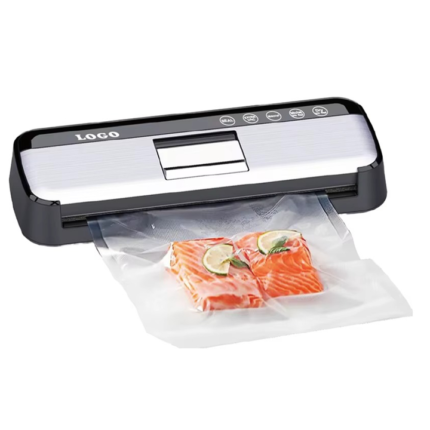
Envasadora al vacío, 135W, sellado de 30 cm, cubierta de aluminio
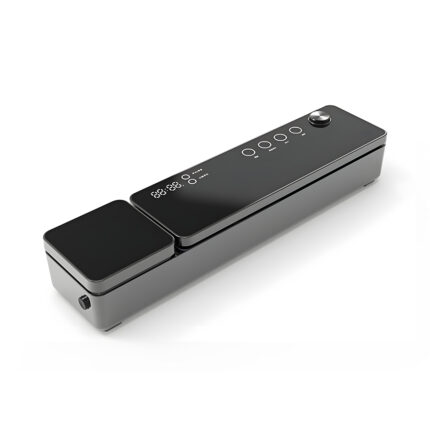
Machine sous vide, 110W, 60kPa, scellage 26cm, balance intégrée
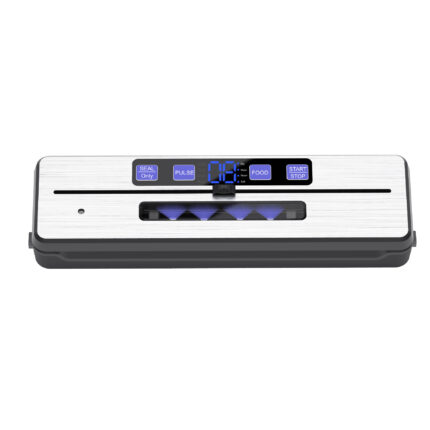
Seladora a Vácuo, 70kPa, Tela Touch Screen, Fita Dupla
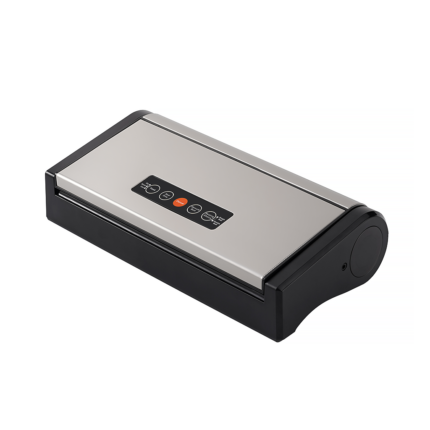
Machine sous vide, 75kPa, Tactile, Rechargeable USB
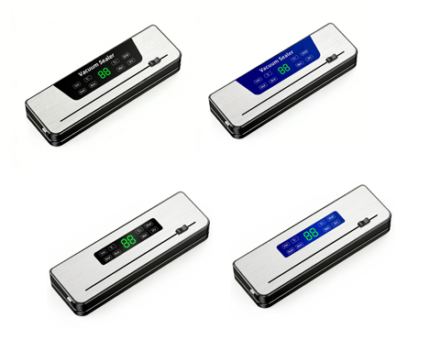
Pakowarka próżniowa, 120W, 30cm, ekran dotykowy, 65Kpa
Ready to order or need a wholesale quote?
Prime Household manufactures these appliances direct from our Guilin, China factory — OEM, private-label and B2B welcome. Tell us your market and volume.