UV Mattress Robot 254nm: What UAHRC11 Buyers Must Know
At 500 units, UAHRC11 starts at $30.07 each; because direct UVC can injure skin and eyes, shielding and shutoff controls belong in its release file. A UV mattress robot is a compact cordless vacuum that travels on a bed surface. This buyer guide weighs its 8W system, 120-minute runtime, three drop sensors, price tiers and order controls.
Source note: Product, price and packing figures in this guide come from Prime Household’s published UAHRC11 catalogue specification and tier data current in August 2026. Values not stated there are left open.
// 01 — Key takeaways
Prime Household operates as a manufacturer and trading company backed by a documented 15,000 m² facility and a 12-month warranty. See the Trust Center.
The published specification lists 254nm as the UV-C lamp wavelength.
Rated power is paired with a 2000mAh battery and approximately 120 minutes of working time.
Three drop sensors support bed-edge detection; a supervised edge test still belongs in acceptance.
Lowest published unit price at 3,000 units; custom MOQ is 1,000 units.
// 02 — Product fit
What makes a UV mattress robot a distinct product?
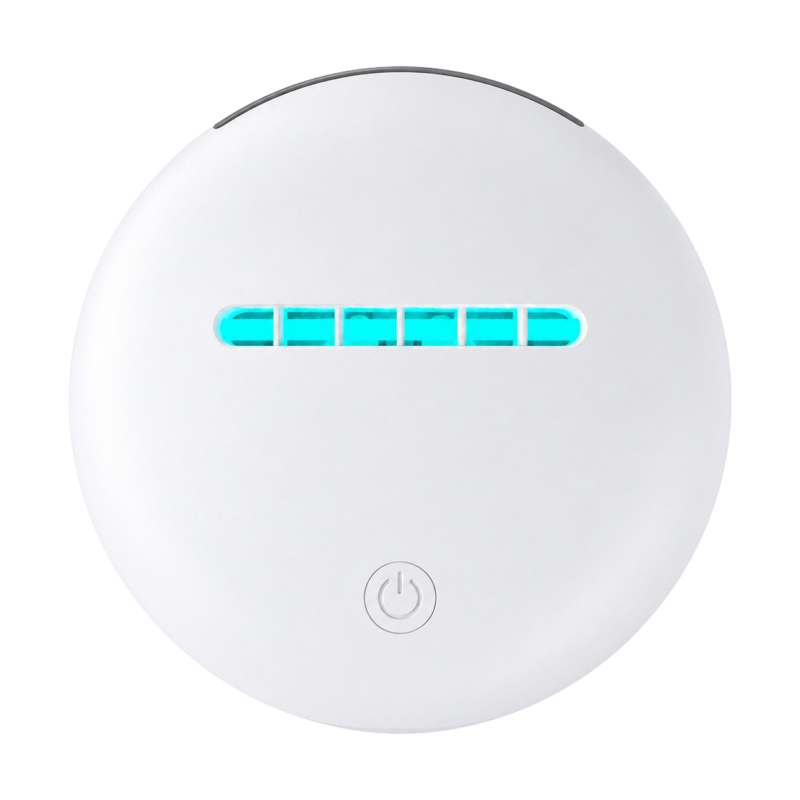
UAHRC11 is designed around a mattress-sized surface, not a room floor. Its 160×160×50mm body, automatic travel, handheld mode and three drop sensors create a compact bedding-care proposition. The buying decision turns on surface coverage, dust handling, edge behavior and UV safety evidence rather than floor mapping or mopping.
Is UAHRC11 a floor-cleaning robot?
No. The product record describes bed and mattress use, while the compact chassis has no listed mop, charging dock, app or room-navigation system. Presenting it beside floor robots without naming the intended surface would create the wrong performance comparison.
What does automatic plus handheld mode change?
Automatic mode lets the unit travel on a bounded bed surface. Handheld mode lets an operator place it on other reachable fabric areas. That flexibility also changes the operating geometry, so the release instructions must distinguish automatic use from handheld handling.
Which performance values are not specified?
UAHRC11 does not specify suction pressure, airflow, dust-bin volume, filter grade, charging duration or a debris-removal result. Buyers cannot derive those values from the documented 8W power, 120-minute runtime or compact dimensions.
// 03 — Specifications
Which UV mattress robot specifications matter first?
UAHRC11 specifies electrical input, battery, runtime, noise, lamp wavelength and sensing. Its “Collision Detection: 2 seconds” entry needs a defined test meaning before it becomes an acceptance criterion. The table states all eight published values and explains the purchasing decision each one supports.
UAHRC11 specification sheet
Rev. 2026.08
| Specification | UAHRC11 published value | Buying relevance |
|---|---|---|
| Rated power | 8W | Defines the listed electrical load |
| Noise | <35dB | Creates a testable noise ceiling and measurement question |
| Battery | 2000mAh | Identifies the listed battery capacity |
| Working time | Approx. 120min | States the published runtime reference |
| Charging voltage | 5V/1A | Defines input for the supplied USB cable |
| UV lamp | 254NM | Identifies the listed lamp wavelength |
| Drop detection | 3 | Identifies the listed sensor count |
| Collision detection | 2 seconds | Needs a defined method before acceptance |
Does 120 minutes define usable coverage?
No. Runtime states elapsed operation under an unstated condition. Usable coverage also depends on travel pattern, overlap, turns, edge response, fabric drag and whether the lamp remains enabled. A timed route on a defined mattress converts the published runtime into channel-specific evidence.
How should buyers read the noise value?
The listed ceiling is less than 35dB. Distance, room background, operating mode and test method are not specified, so any retail-facing noise statement should name the measurement setup used for the released unit.
What ships in the retail pack?
The retail pack includes one main unit, one manual and one USB charging cable. A wall adaptor is not listed, so destination packaging should show the supplied contents without adding an unlisted power accessory.
// 04 — Comparison
How does UAHRC11 compare with floor-cleaning robots?
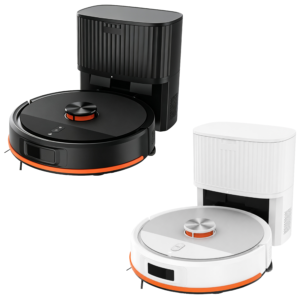
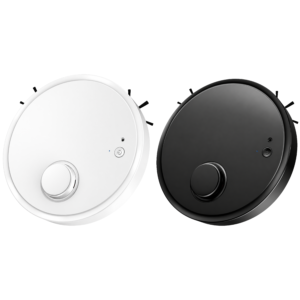
UAHRC11 is the only mattress-focused unit in this three-model comparison. UAHRC10 is a low-profile random-navigation floor sweeper, vacuum and mop, while UAHRC18 is a laser-navigation floor system with auto dust collection. Their published prices describe different jobs and quantities, not a value ranking.
| Model | Intended format | Power | Battery / runtime | Size | Published price |
|---|---|---|---|---|---|
| UAHRC11 | Automatic and handheld mattress robot | 8W | 2000mAh / approx. 120min | 160×160×50mm | $30.07 at 500 units |
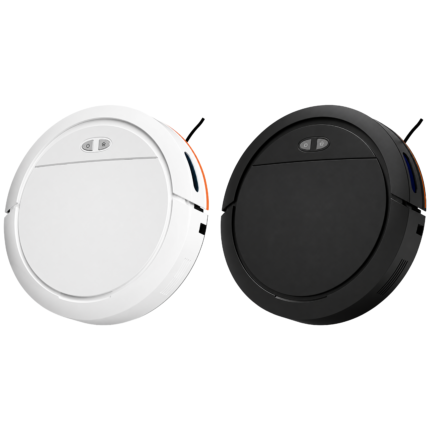
| UAHRC10 | Random-navigation floor sweep, suction and mop | 7.5W | 3.7V/2400mAh / ≈70min | 248×248×40mm | $10.58 at 50 units |
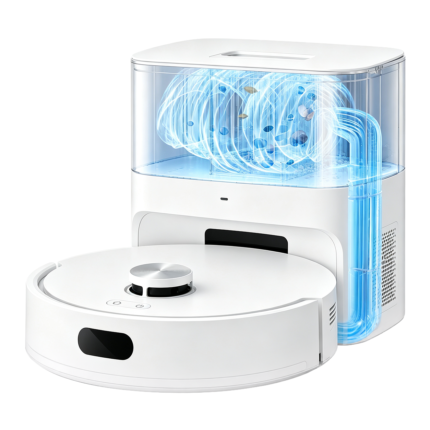
| UAHRC18 | Laser-navigation floor vacuum and mop with dust station | 45W | 3000mAh / runtime not supplied | 325×325×93; unit not stated | $138.52 at 500 units |
Why should price stay tied to quantity?
UAHRC11 and UAHRC18 show a 500-unit price, while UAHRC10 shows a 50-unit price. The matrix therefore supports format selection only. A commercial comparison needs the same volume, branding, pack, inspection basis and shipment term across every model.
When does UAHRC11 fit the range?
The UV mattress robot fits a dedicated bedding-care line where compact storage, cordless use and bed-edge sensing are central. It should not be positioned as a substitute for mapped floor coverage, wet mopping or an automatic charging dock.
When is a floor robot the correct brief?
Choose UAHRC10 when the brief requires a compact sweep-suction-mop floor unit with random navigation. Choose UAHRC18 when the range needs laser path planning, app control, auto recharge and a 4L dust bag. Neither floor model is specified for mattress use.
// 05 — Claims
Can a 254nm lamp prove a dust-mite claim?
No. A 254nm wavelength identifies part of a UV-C system, but it does not describe irradiance at the fabric, dwell time, delivered dose or a tested mattress outcome. The published UAHRC11 specification lists no irradiance, delivered-dose or mite-reduction result, so it supports no efficacy percentage or “kills mites” wording.
What does the 254nm field establish?
It establishes the lamp wavelength. The U.S. FDA’s UV radiation guidance says direct UVC exposure can injure skin and eyes. For both automatic and handheld use, the release criteria should cover enclosure, shielding, warnings and lamp shutoff behavior.
What would support a retail efficacy statement?
A defensible file names the test organism or material, lamp output, distance, angle, dwell time, delivered dose, surface condition, controls, repetitions and result. The wording on the box must stay within that result. A wavelength, sensor count or runtime is not a substitute for this evidence.
How does mattress care fit a broader control plan?
The U.S. EPA’s indoor-air guidance discusses humidity control, bedding washed above 130°F and HEPA-filtered vacuuming as parts of dust-mite exposure control. UAHRC11 does not specify a HEPA filter, so that term should not appear in its product copy.
A wavelength belongs in the specification; an outcome belongs only in a traceable test report.
— Mi Lan, Founder, Guilin Prime Household Products Co., Ltd.
// 06 — Acceptance
What should the UAHRC11 acceptance protocol measure?
The protocol should produce observed results for route coverage, edge response, collision recovery, runtime, charging, dust capture and UV shutoff on one defined surface. It should also inspect the manual and labels. This is the article’s single functional test sequence; commercial and carton fields stay in their own release tables.
Define the surface and route
Record mattress dimensions, fabric type, quilting, slope, edge shape and starting point. Mark a simple grid, run automatic mode and note covered cells, repeats, stalls and operator interventions. Repeat the same route after cleaning the wheels so surface drag is not confused with navigation behavior.
Challenge edge and collision response
Use a supervised bed with a protected fall zone. Present representative straight edges, rounded corners and low soft obstacles at fixed positions. Log the closest edge approach, contacts, stops and recovery time. The three drop sensors identify hardware count; the route supplies behavior evidence.
Measure runtime, charging and dust handling
Start from a documented charge state and run one named mode until stop. Record elapsed time, route coverage and battery indication, then log recharge time at the stated 5V/1A input. Weigh or otherwise document collected debris only with a defined method; no pickup value is preclaimed here.
Inspect UV shielding and lift-off response
A qualified lab should map accessible radiation in automatic and handheld positions, including lift, tilt, edge and stall events. Record lamp state and shutdown timing without exposing an operator. Match warnings, maintenance steps and prohibited viewing or skin exposure to the released hardware and destination rules.
// 07 — Channel fit
Which B2B channel fits UAHRC11?
UAHRC11 fits distributors that need a compact bedding-care appliance with cordless automatic and handheld modes. Bedding retailers, home-care ranges and hospitality procurement may value the format. Channels that require whole-room mapping, wet mopping or automatic docking need a floor robot instead.
What can a distributor merchandise today?
Merchandise the documented 8W rated power, less-than-35dB noise entry, 2000mAh battery, approximately 120-minute runtime, 5V/1A charging, three drop sensors, dual-mode use and compact dimensions. Keep every feature label aligned with the released configuration.
What does private-label scope add?
A private-label release needs logo artwork, colour, manual language, warning layout, retail box, barcode, charging presentation and carton marks. The custom release should also name the permitted market wording and safety labels. UAHRC11 lists a 1,000-unit custom MOQ; lead time and Incoterm remain quotation fields.
Who should not shortlist this UV mattress robot?
Do not shortlist it for wet mopping, whole-room mapping, app scheduling or docked recharge; UAHRC11 does not specify those functions. Buyers who require a stated filtration class, suction pressure or dust-bin capacity should wait for those values or choose a model that publishes them.
// 08 — Pricing
How do price tiers and MOQ shape the quote?
The published ladder runs from $30.07 per unit at 500 units to $29.17 at 3,000. UAHRC11 lists a 1,000-unit custom MOQ, so the first tier does not by itself promise customized goods. Every quotation should pair quantity with branding, packaging, inspection scope and shipment terms.
UAHRC11 published price ladder
USD / unit
| Published quantity | Published discount entry | Price per unit |
|---|---|---|
| 500 units | 0.00 | $30.07 |
| 1,000 units | 0.30 | $29.77 |
| 2,000 units | 0.60 | $29.47 |
| 3,000 units | 0.90 | $29.17 |
How should buyers read the 500-unit tier?
The price ladder begins at 500 units. UAHRC11 separately lists “MOQ (custom): 1000.” The 500-unit tier is therefore a published price reference, not a promise of customization at that quantity.
Which quote fields remain open?
Production lead time, Incoterm, payment schedule, inspection basis, destination lab work, spare parts and warranty handling remain quotation fields. The published UAHRC11 specification assigns no value to them.
// 09 — Logistics
What do the carton figures mean for freight planning?
UAHRC11 packs 20 units per carton in a listed 418×370×425mm case with 14kg gross weight and 0.0657305m³ volume. Unit, retail pack, master carton and container entries must remain distinct. The figures support early cube planning, while the released packing list governs the booking.
UAHRC11 packaging record
Published values
| Layer | Dimensions and weight | Contents or quantity |
|---|---|---|
| Unit | 160×160×50mm; 0.36kg net | UAHRC11 main unit |
| Retail pack | 191×191×65mm; 0.68kg gross | Main unit ×1, manual ×1, USB charging cable ×1 |
| Master carton | 418×370×425mm; 14kg gross; 0.0657305m³ | 20 units |
| 20ft container | Published planning entry | 7,911 units |
| 40ft container | Published planning entry | 16,430 units |
| 40HQ container | Published planning entry | 20,690 units |
What should the carton artwork identify?
Mark model, quantity, colour, charging input, destination language, handling symbols and traceability details from the released order. The accessory statement should show a USB cable but no unlisted wall adaptor. Retail and master-carton revisions should share the same model identity.
Are container quantities guaranteed load plans?
No. They are published planning quantities. A final load depends on released carton dimensions, pallet use, container condition, loading pattern and carrier limits. Use the exact entries for early cube planning, then base the booking on the final packing list and shipment configuration.
// 10 — Order control
How does Prime Household control a UAHRC11 order?
The published UAHRC11 specification does not identify this SKU as either own-manufactured or traded; that supply route remains unconfirmed. Prime Household operates as a manufacturer and trading company. Its order control should still bind the product revision to component, function, packing, compliance and 12-month warranty requirements.
Supply-route and specification control
The commercial file names the applicable supply route and fixes housing geometry, colour, logo position, component revision and any incoming criteria.
Motor, PCBA and UV-module configuration
The released specification ties the 8W system, 2000mAh battery, 5V/1A input, controls, sensors and 254nm lamp module to one product revision.
Quality control and functional testing
Quality control covers model identity, charging, travel, collision recovery, drop response, manual mode, lamp shutoff and pack contents against the release criteria.
Company credentials and 12-month warranty
Prime Household’s company profile names CE and RoHS, and its warranty is at least 12 months. The order file identifies the marks applicable to the destination and the warranty claim route; no certificate is attached here.
What belongs in the commercial release?
Bind the UAHRC11 specification revision to quantity, tier price, customization scope, retail and master-carton revisions, safety wording, the functional acceptance protocol, shipment terms, payment and warranty handling. This single schedule connects the verified product and commercial data without repeating the test steps.
// 11 — FAQ
Frequently asked questions about a UV mattress robot
The questions below cover the 254nm specification, cleaning intervals, purchase criteria and bed-edge behavior for UAHRC11. The single UV answer points to the detailed claims and acceptance sections above, while the remaining answers focus on documented operating and selection decisions for wholesale buyers.
What does the 254nm UV-C specification mean?
It identifies the lamp wavelength. For UAHRC11, treat 254nm as a specification rather than a mattress-care result. The claims section explains the documentation boundary, and the acceptance protocol covers enclosure, lamp shutoff and lift-off behavior. Together, those sections provide the substantiation and safety criteria for a buyer’s release.
How often should you vacuum a mattress for dust mites?
UAHRC11 does not set a universal cleaning interval. Base instructions on the mattress maker’s care rules, local guidance, debris load and the released operating procedure. EPA guidance places vacuuming within broader dust-mite control that also includes humidity management, mattress covers and hot washing of bedding.
What should buyers look for in a mattress vacuum?
Look for stated suction or airflow, filtration, dust capacity, route coverage, edge sensing, a defined noise method, battery and charging data, serviceable parts and clear warnings. UAHRC11 publishes several electrical and sensor values but does not specify suction, filtration, dust capacity or charging duration.
Can the UAHRC11 robot fall off a bed?
UAHRC11 lists three drop sensors and automatic shutdown, but sensor count does not predict behavior on every fabric, colour, corner or edge profile. The acceptance protocol should record closest approach, stops and recoveries on representative mattresses in a protected test area before automatic use is released.
// 12 — Decision
Conclusion: when does UAHRC11 belong in the range?
Shortlist UAHRC11 when a bedding-care range needs a compact automatic-and-handheld robot and the buyer can run the acceptance protocol. Its commercial case rests on the published 8W system, 120-minute runtime, three drop sensors, exact price tiers and carton data—not on floor-robot functions that the model does not specify.
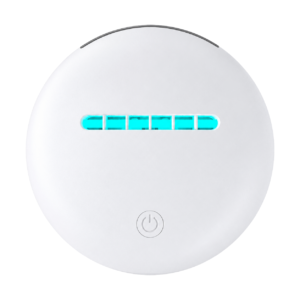
Featured model
UAHRC11 cordless UV mattress robot vacuum
8W · 2000mAh · approx. 120min · 254NM lamp · three drop sensors
Similar products
Compare adjacent robot formats before choosing a mattress-focused or floor-focused retail proposition.
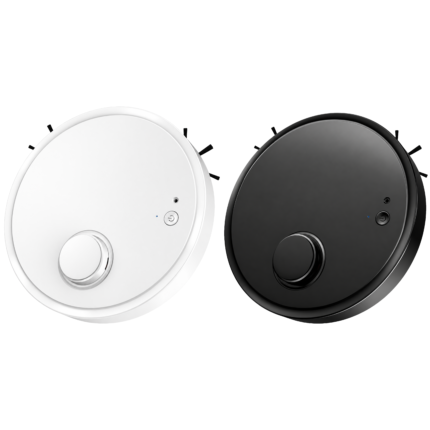
Fully Automatic Ultra-Slim 1200Pa Robot Vacuum Cleaner and Mop with App Control for Household Floor Cleaning
Ready to order or need a wholesale quote?
Prime Household is the brand of Guilin Prime Household Products Co., Ltd., a manufacturer and trading company serving household and kitchen products. OEM, ODM, private-label and B2B enquiries are welcome. Tell us your market, pack requirements and volume.