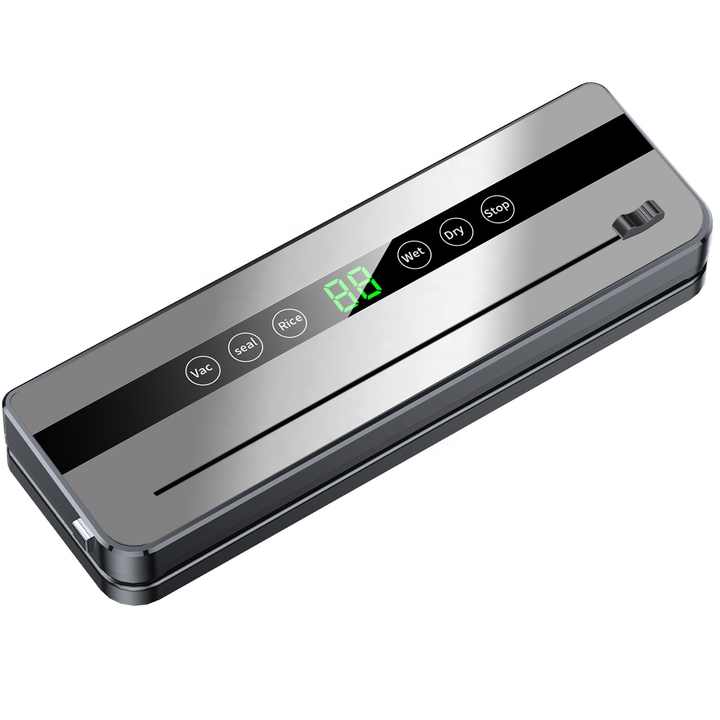
An automatic vacuum sealer machine is a counter-top appliance that pulls air out of a textured plastic bag and heat-seals it shut in one button press — protecting food from oxygen, moisture and freezer burn so it stays fresh roughly three to five times longer than loose storage. For distributors, hotels and private-label brands sourcing an automatic vacuum sealer machine in 2026, the questions are price-per-unit, build quality and whether one automatic vacuum sealer machine SKU can cover dry pantry, wet-marinated and bulk-batch sealing. This guide walks through how the Model 58G — a six-mode 65 kPa automatic vacuum sealer machine with LED display, multi-bag sealing and a detachable base — fits a wholesale catalogue.
Buying for resale? See our automatic vacuum sealer manufacturer for factory-direct OEM and wholesale terms.
Written by the Prime Household product team · Reviewed by Mi Lan, founder of Guilin Prime Household Products Co., LTD · Updated June 2026 · ~10 min read
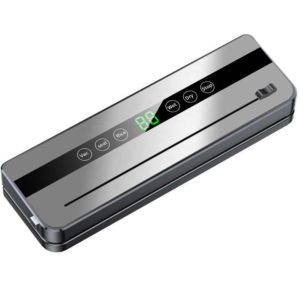
- Six dedicated modes — not just two. The 58G ships with Vac, Seal, Rice, Wet, Dry and Stop, so distributors can market it as one SKU for grains, marinated meat and dry pantry alike.
- Simultaneous multi-bag sealing is the feature catering kitchens and serviced apartments ask for — batch-sealing several portion bags in one cycle instead of one-at-a-time.
- 65 kPa suction sits in the everyday-food sweet spot — strong enough to stop freezer burn on meat, gentle enough not to crush bread or berries.
- LED display + waterproof touch screen survive a busy back-of-house environment; the detachable base lifts off for cleaning between shifts.
- 100–240 V dual voltage means one SKU per warehouse for US, EU, UK and AU destinations — just fit the regional plug.
- Factory-direct from $8.30/unit at 5,000 pcs, MOQ 100, FOB China, 15–30-day lead time, CE/RoHS compliance documentation included.
What an Automatic Vacuum Sealer Machine Actually Does
An automatic vacuum sealer machine is a small electric pump-and-heater combo that, in one button press, removes the air around food in a textured bag and welds the bag shut. The job sounds simple, but the automatic vacuum sealer machine is the foundation of three different businesses: home food preservation, restaurant prep and wholesale packaging. A modern automatic vacuum sealer machine like the 58G adds touchscreen control, multi-mode programming and multi-bag handling to that core job.
The physics in plain English
Air is roughly 21% oxygen, and oxygen is what drives spoilage — rancid fats, oxidised pigments, mould, freezer burn. Pulling air to 65 kPa removes most of that oxygen from the bag; the heat strip then seals so no new air can creep in. It is not chemistry, it is just physics: less oxygen, slower spoilage.
Why the 58G automatic vacuum sealer machine suits a wholesale catalogue
Three things make this automatic vacuum sealer machine easy to sell: a waterproof touch screen that wipes clean with a damp cloth, a built-in bag cutter so the end-user makes any length of bag from a roll, and a detachable base for hygienic cleaning. The unit measures 36.5×11×5.5 cm and weighs about 0.78 kg, so the automatic vacuum sealer machine ships 20 to a 55×39×32 cm export carton at roughly 17 kg — predictable freight, predictable shelf footprint.
The Six Modes That Set the 58G Automatic Vacuum Sealer Machine Apart
Most entry-level vacuum sealers give you Dry and Wet. The 58G automatic vacuum sealer machine adds four more — and each one removes a complaint that distributors hear from end-users.
Vac and Seal as separate buttons
Pressing Vac only pulls air without sealing, which is what you need for canisters, jar lids and the external hose attachment. Pressing Seal only welds a bag closed without suction, which is how you re-close a chip bag or finish a partially used roll. On a cheap two-mode unit this is one combined cycle — not flexible enough for a catering kitchen.
Dry mode for the pantry
Dry is the default for solids: coffee beans, nuts, jerky, rice, pasta, hard cheese, raw meat with no marinade. The pump runs to 65 kPa and the heat strip seals at full duration. Most of a household’s daily food belongs here.
Wet mode for marinated and damp foods
Wet eases off the suction and runs the heating strip longer so the seal grips a slightly damp bag edge. It is what stops marinated chicken or brined cheese from being sucked toward the pump intake. As the FoodSaver sous-vide guide notes, wet/dry mode selection on any automatic vacuum sealer machine is the single biggest factor in seal reliability on damp food.
Rice mode for grains
Rice mode pulls air more gently and seals quickly so small granular contents (rice, lentils, beans, coffee, spice mixes) do not shift toward the pump intake. It is a quietly important feature for wholesalers selling into bulk-pantry households, weevil-prone tropical climates and emergency-preparedness kits.
Stop for delicate items
A dedicated Stop button cuts the cycle the moment soft food — berries, fresh bread, soft pastries — starts to compress. It is what turns a single automatic vacuum sealer machine into a one-machine-fits-everything appliance for end-users.
Why Multi-Bag Sealing Matters for Catering and Distribution
Simultaneous multi-bag vacuum sealing is the 58G automatic vacuum sealer machine’s headline feature for B2B buyers. Most sealers handle one bag per cycle; the 58G’s 30 cm sealing strip can close several portion-sized bags side by side in a single cycle.
Where the time saving lands
In a 200-cover hotel breakfast prep, sealing 40 individual portion bags one-at-a-time can eat 25 minutes of a chef’s shift. A 30 cm bar that closes three or four small portion bags per cycle cuts that to under 10 minutes — a meaningful labour saving stocked against a low-cost piece of equipment.
Where it matters in retail
Private-label brands selling meal-prep accessory kits use multi-bag sealing as a feature talking point on their listings. Many competing units in this price band cannot show that capability honestly.
What 65 kPa Suction Means on an Automatic Vacuum Sealer Machine
Suction power on an automatic vacuum sealer machine is measured in kilopascals (kPa) below atmospheric pressure. The everyday sweet spot is 60–80 kPa; higher numbers (95 kPa and up) belong on chamber sealers built for restaurant sous-vide. According to an independent vacuum-sealer specs guide, 60–80 kPa covers nearly all home food storage.
65 kPa is the everyday sweet spot
It removes enough oxygen to stop freezer burn on meat for one to three years at 0 °F (−18 °C), protect pantry goods from oxidation, and keep coffee aromatic for months — while staying gentle enough that bread, berries and pastries do not get crushed in the bag. The USDA Food Safety and Inspection Service confirms that food kept constantly at 0 °F (−18 °C) is always safe — what an automatic vacuum sealer machine protects is the eating quality.
Honest framing for your listings
Do not market 65 kPa as “industrial” suction — it is not, and end-users will return the unit. Market it as “the right amount of suction for everyday food” and back it up with the multi-mode story. That is the framing that converts well in 2026.
How to Use the 58G Automatic Vacuum Sealer Machine — A Three-Step Workflow
The end-user workflow on this automatic vacuum sealer machine is short enough to fit on a single-page leaflet, which matters for B2B buyers writing their own user manuals.
Step 1 — Cut and fill the bag
Pull a bag from a textured roll, slide it under the built-in cutter and slice to the length you need — leave 4–5 cm of clear bag above the food so the seal channel stays clean.
Step 2 — Pick the mode
Dry for solids, Wet for marinated, Rice for grains, Vac+Seal for canisters via the external hose, or Stop for delicate items. The LED display shows which mode is selected and how far through the cycle you are.
Step 3 — Seal and store
Place the open end of the bag in the channel and close the lid. The pump pulls to 65 kPa, the heating strip welds the bag, and the cycle ends with an audible cue. Label and freeze, fridge or pantry it.
58G Automatic Vacuum Sealer Machine Specifications — Why Each Number Matters
For procurement teams writing tender documents around the 58G automatic vacuum sealer machine, the spec table below gives both the number and what it means in field use.
| Spec | This model (58G) | Why it matters |
|---|---|---|
| Material | ABS housing | Food-safe plastic; lighter freight than steel, customisable in colour for private-label runs. |
| Power | 120 W | Big enough for fast cycle times; small enough that two units can run on one circuit. |
| Voltage | 100–240 V | One SKU per warehouse worldwide — just fit the regional plug at packing. |
| Sealing width | 30 cm | Big enough for family-pack bags and side-by-side multi-bag sealing in one cycle. |
| Heating strip width | 3 mm | Wide enough for a strong seal on damp bags; narrow enough to seal close to the food. |
| Suction | 65 kPa | Everyday sweet spot — stops freezer burn without crushing bread or berries. |
| Flow rate | 4 L/min ±15% | Determines cycle speed; 4 L/min keeps a standard portion bag under 15 seconds. |
| Accessories | Vacuum bags + external hose | Hose unlocks canisters, jars and wine stoppers without an extra purchase. |
| Product size | 36.5×11×5.5 cm · 0.78 kg | Fits a standard kitchen drawer; light enough for retail-shelf displays. |
| Export carton | 55×39×32 cm · 20 pcs · 17 kg | Predictable freight cubic; 20 units per carton suits LCL and mixed-pallet shipments. |
How We Manufacture the 58G Automatic Vacuum Sealer Machine in Guilin
Prime Household (Guilin Prime Household Products Co., LTD) builds every Model 58G automatic vacuum sealer machine in our own factory in Guilin, Guangxi, China. That matters because wholesale buyers are paying for predictability — same housing tolerance, same heating-strip yield, same colour every batch.
Own factory, own tooling
The ABS housing comes from our own private mould, so the lid hinge, the cutter, the heating bar and the touch panel line up identically across production runs. Owning the tooling also lets us customise colour, branding and packaging for partners without retooling fees.
Quality control on every batch
Each production batch goes through documented checks: incoming-material inspection on the ABS, electronics and heating element; electrical-safety and seal-strength testing on every finished unit; and a powered run-in that catches any pump or heat fault before packing. Defect rates are tracked and reported per shipment.
Certifications and warranty
Our 58G automatic vacuum sealer machine meets international electrical-safety and environmental standards including CE and RoHS for export markets, and ships with a 12-month warranty. Compliance documentation is provided to wholesale buyers with the first shipment.
Wholesale, OEM and Private-Label Terms for the 58G Automatic Vacuum Sealer Machine
If you are stocking the 58G automatic vacuum sealer machine rather than using one, what matters is price-per-unit, lead time, branding flexibility and shipping terms.
Who buys at volume
Kitchenware distributors restocking for the bulk-buying season, hotel groups standardising back-of-house kit, serviced-apartment operators wanting one durable unit per kitchen, emergency-preparedness retailers stocking long-shelf-life kits, and private-label brands looking to put their own name on a proven design without paying for new tooling.
MOQ, lead time and payment
Minimum order quantity is 100 units; bulk lead time is 15–30 days from deposit; samples ship in 3–7 days. We work FOB China with EXW and CIF options, accept 30% / 70% T/T and Alibaba Trade Assurance. Per-unit pricing drops from $12.00 at 1 pc to $11.00 at 20, $9.50 at 500 and $8.30 at 5,000 — the 5,000-pc tier is where chain retailers usually land.
One plug-flexible SKU worldwide
Because the 58G automatic vacuum sealer machine runs at 100–240 V, you stock a single model and we fit the US, EU, UK or AU plug for the destination — no separate inventory per region, no warehouse re-routing for a last-minute order from a different country.
Automatic Vacuum Sealer Machine vs Ziploc — the Real Comparison
The honest answer is that the two solve different problems — zip bags for short-term, an automatic vacuum sealer machine for long-term — and wholesale catalogues benefit from spelling that out.
Shelf life difference
An independent food-storage comparison reports that vacuum-sealed beef in the freezer at −18 °C holds for two to three years without freezer burn, while the same meat in a zip bag is typically usable for around six months before quality drops noticeably. That is roughly a five-fold extension on the items where waste hurts most — and it is the single biggest reason households and caterers buy an automatic vacuum sealer machine in the first place.
Cost over time
Zip bags cost roughly $0.10–$0.40 per use; textured vacuum-roll bags land in a similar per-use range once the user cuts to length. The automatic vacuum sealer machine pays back through avoided food waste, not bag cost.
Where each one wins
Zip bags win for tomorrow’s lunch; the 58G automatic vacuum sealer machine wins for bulk meat buys, monthly batch-prep and any food destined for the freezer.
Model Comparison — 58G Against Other Prime Household Sealers
For buyers building a tiered automatic vacuum sealer machine listing or comparing units side by side, here is how the 58G fits next to its siblings in the Prime Household range.
| Model | Power / suction | Type | From (per unit) |
|---|---|---|---|
| 58G (this guide) | 120 W · 65 kPa | Six-mode automatic with multi-bag sealing | $8.30 |
| 52T | Automatic external | Touchscreen with bag cutter | $11.90 |
| 18862 | 65 kPa | Multi-bag with detachable base | $12.40 |
| 26G | 65 kPa stainless face | Touchscreen, built-in cutter | $11.90 |
| 86CX | Automatic external | Compact household | $10.90 |
| 66E | 60 kPa | Household with RV application | $10.31 |
At factory-direct pricing the 58G automatic vacuum sealer machine is the entry-volume value pick of the range — six modes and multi-bag sealing at the lowest per-unit cost.
Frequently Asked Questions
What is a good kPa for an automatic vacuum sealer machine?
For everyday food preservation, an automatic vacuum sealer machine in the 60–80 kPa range is the sweet spot — strong enough to stop freezer burn on meat and prevent oxidation on dry pantry goods, while staying gentle enough not to crush bread or berries. The 58G’s 65 kPa lands squarely in that range. Suction above 90 kPa is usually reserved for chamber sealers built for restaurant sous-vide work.
How long does vacuum-sealed food really last?
Roughly three to five times longer than the same food in a zip bag or container. Frozen meat holds for one to three years instead of around six months; coffee keeps its aroma for months; sealed leftovers in the fridge last one to two weeks rather than a few days. The USDA notes that food kept constantly at 0 °F (−18 °C) is always safe — what vacuum sealing protects is the eating quality.
How do you vacuum seal wet or marinated food?
Use Wet mode. It eases off the suction and extends the heating-strip duration so the seal still grips a slightly damp bag edge, and so juice does not get pulled toward the pump intake. For free liquids like soup or sauce, freeze the liquid into a block first and then seal in Dry mode — the frozen block will not migrate up the bag.
What does the Rice mode on the 58G do?
Rice mode pulls air more gently and seals faster than Dry mode, so granular contents (rice, lentils, beans, coffee, spice mixes) do not shift toward the pump intake during the vacuum cycle. It is a quietly important feature for households doing bulk-pantry storage and for emergency-preparedness kits.
Can the 58G be used for sous vide cooking?
Yes, at home and light-commercial scale. Season the food, seal it in a textured bag with Wet mode (so marinade does not migrate), and drop the sealed bag in the sous-vide bath. For high-volume restaurant sous-vide, a chamber sealer is the right tool; for home and small-cafe sous-vide, the 58G is fit for purpose.
What MOQ and lead time do you offer for wholesale orders?
MOQ is 100 units; lead time 15–30 days from deposit; samples in 3–7 days; shipped FOB China with EXW and CIF options. We support OEM and private-label with custom colour, branding and packaging from our own tooling, and provide CE/RoHS compliance documentation with the first shipment.
The Verdict on the 58G Automatic Vacuum Sealer Machine for Wholesale Buyers
For distributors, hotels, serviced apartments and private-label brands sourcing an automatic vacuum sealer machine in 2026, the 58G is a value pick that does not feel like a compromise. Six modes, multi-bag sealing, an LED display and a detachable base — at a per-unit price that starts at $8.30 at the 5,000-piece tier — is the automatic vacuum sealer machine combination most of our recurring wholesale buyers settle on.
Model 58G — Automatic Vacuum Sealer Machine with LED Display, Six Modes, Multi-Bag Sealing & UV Function
120 W · 65 kPa · 30 cm seal width · Vac / Seal / Rice / Wet / Dry / Stop modes · simultaneous multi-bag vacuum sealing · built-in bag cutter · detachable base · waterproof touch screen · external vacuum hose · 100–240 V worldwide.
Factory-direct from $8.30/unit (5,000 pcs tier) · MOQ 100 · FOB China · 12-month warranty · OEM & private-label welcome · CE/RoHS documentation included.
More Vacuum Sealers from Prime Household
Stocking a tiered range, or comparing several units? Here are other vacuum sealers from the Prime Household catalogue, all factory-direct and OEM-ready:
 Touchscreen Sealer with Cutterfrom $11.90/unit
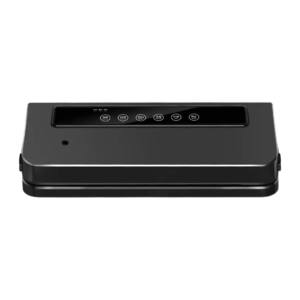 Multi-Bag Detachable Sealerfrom $12.40/unit
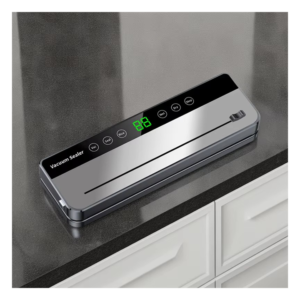 Stainless Steel Touchscreenfrom $11.90/unit
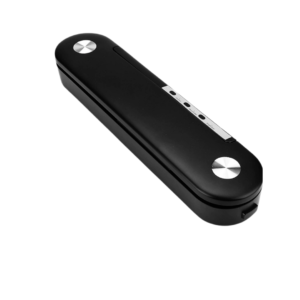 Compact Automatic Sealerfrom $10.90/unit
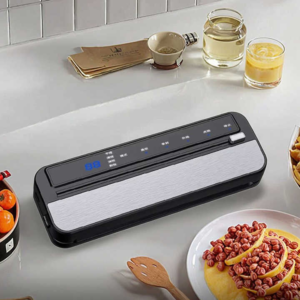 60 kPa RV Vacuum Sealerfrom $10.31/unit
Ready to order Model 58G or need a wholesale quote?
Prime Household manufactures the 58G direct from our Guilin, China factory — OEM, private-label and B2B welcome, with a 12-month warranty, tiered volume pricing and CE/RoHS documentation included.
📧 [email protected] · 📞 +86 180 4727 3243 · Request a quote